(FRI)END TIMES
...Why we keep trying to force the end, and miss the life we’ve been given.

Friends, our eschatological presuppositions may be ruining our lives and possibly the world. Especially the interpretations of a dispensationalist persuasion are a retreading of the same type of thinking that continually led the Israelites astray, and still continues to this day. From the very beginning, we see two distinct patterns: man reaching upward, trying to become like God through effort, ascent, and right thinking; and conversely, God moving downward, choosing to dwell among us and unite heaven and earth.
In the creation of man and woman, we see this pattern established clearly. “Then the Lord God said, ‘It is not good that the man should be alone’” (Genesis 2:18). So God forms Eve from Adam’s side, and the result is this: “Therefore a man shall leave his father and his mother and hold fast to his wife, and they shall become one flesh” (Genesis 2:24). And just before that, the first command given to humanity is, “Be fruitful and multiply and fill the earth” (Genesis 1:28). So the first instruction in all of Scripture is union and multiplication, where oneness produces life, and out of one comes two, and through their union: life in abundance. Deeply embedded in God’s untainted design is a pattern of communion, love, and self-giving that reflects the true nature of God and His ultimate reality.
Man is made in His image, yet man is not meant to be alone, which suggests that the image of God hinges on being in relationship. The expression built into His design is a desire to pour out love and to receive it in return. The fruitful mandate does not only point to procreation, but to shared life more broadly, to friendship, to family, and to tables filled and homes opened, to laughter, meals, and stories told late into the night. It is a vision of an abundant life that is not hoarded or isolated, but given away and shared with others.
A chapter later, the serpent tempts Adam and Eve with this: “For God knows that when you eat of it your eyes will be opened, and you will be like God” (Genesis 3:5). And so they reach for what is offered, taking hold of the fruit in an attempt to ascend, believing that through right knowing—through becoming like God in knowledge—they could justify their position and secure godlikeness for themselves. Then shortly after, “they heard the sound of the Lord God walking in the garden in the cool of the day” (Genesis 3:8). God walks among them in the garden, dwelling with His creation, evidencing His original pattern. We see the same idea at Babel. “Come, let us build ourselves a city and a tower with its top in the heavens… lest we be dispersed over the face of the whole earth” (Genesis 11:4). Again, the direction of travel is upward, with humanity attempting to build its way to God.
The same pattern of misunderstanding continues in 1 Samuel. The people say, “Now appoint for us a king to judge us like all the nations.” They are warned. Samuel tells them plainly what this king will do: “He will take your sons… and appoint them to his chariots… He will take your daughters… He will take the best of your fields… and you shall be his slaves.” As is customary, the people refuse to listen. “No! But there shall be a king over us, that we also may be like all the nations.” This is a request for something visible and impressive that will validate them, elevate their standing among the nations, and give them a sense of control over their future. A king represents security they can see and a way to take matters into their own hands rather than entrusting themselves to God.
Appointing a prestigious earthly leader was an attempt to force God’s hand: to secure through structure and appearance what is meant to be received through trust and obedience. It is the same impulse that looks for a formula, a mechanism, or the right set of words to guarantee an outcome, as though aligning ourselves with God were a matter of saying the right thing or constructing the right system (“You can’t earn salvation…All you have to do…”). The desire for a king reveals a preference for something tangible over something relational. In wanting to be like the nations, they trade the presence of God for the appearance of strength, repeating the same upward-reaching instinct that has been there from the beginning.
God’s choosing of David carries this same corrective pattern. He is overlooked and dismissed even by his own family, yet the Lord makes clear what actually matters: “Man looks on the outward appearance, but the Lord looks on the heart” (1 Samuel 16:7). What qualifies David is not the Saul-like stature or visible strength, but his humble character. Later, when the ark is brought into Jerusalem, David dances before the Lord with all his might (2 Samuel 6:14), and there is joy, nearness, and a sense of shared presence. As God is near and dwelling amongst His people, David responds with celebration and participation in that presence.
Shortly after, David expresses a desire to build a house for God, and in 2 Samuel 7 the Lord responds through Nathan, “Would you build me a house to dwell in?” The direction is corrected once again as God turns the idea on its head: “The Lord declares to you that the Lord will make you a house,” and promises, “I will raise up your offspring after you… and I will establish the throne of his kingdom forever.” The impulse to build something for God, even when it comes from a good place, still carries that same upward movement, as though we could construct something to bridge the gap. But God has already made His intention clear long before this: “Let them make me a sanctuary, that I may dwell in their midst” (Exodus 25:8). His desire is not to be housed at a distance or approached through impressive structures, but to be present with His people, to dwell among them, and to build something living through them rather than something static built for Him.
In 2 Samuel 7:13, when God says to Nathan, “He is the one who will build a house for my Name, and I will establish the throne of his kingdom forever,” He is ultimately pointing way beyond Solomon to Christ, and in the fulfillment of that promise we see the same pattern fully expressed. In John, “In the beginning was the Word… and the Word was God” (John 1:1), and then, “the Word became flesh and dwelt among us” (John 1:14), showing that God does not wait for us to escape our way to Him, but comes down to us. Jesus then redefines the temple itself, saying, “Destroy this temple, and in three days I will raise it up” (John 2:19). He was speaking about the temple of His body (John 2:21), making clear that the dwelling place of God is no longer a building but Christ Himself.
This means that when we turn again to light shows and high budget productions, we’re missing the point in the same way, because Jesus has already made our task plain: “You shall love the Lord your God with all your heart and with all your soul and with all your mind… and… you shall love your neighbor as yourself” (Matthew 22:37–39). And He says, “By this all people will know that you are my disciples, if you have love for one another” (John 13:35), and again, “As you did it to one of the least of these my brothers, you did it to me” (Matthew 25:40). He also makes clear the kind of life this produces, saying, “I came that they may have life and have it abundantly” (John 10:10). [Note: I would be remiss if I did not differentiate between modern evangelical expressions and the great cathedrals and works of art of the past. My contention is that many of the beautiful works of the past (and some of the present) are expressions of gratitude and wonder, whereas much of modern Christian art is shaped primarily by an effort to ‘save souls,’ often reducing beauty to a kind of utility.]
Jesus never reduces salvation to a formula for escaping the earth, nor does He articulate anything like a “sinner’s prayer” as the mechanism of salvation. Instead, He speaks in terms of transformation, devotion, and action: “You must be born again” (John 3:3); “Sell all that you have… and come, follow me” (Luke 18:22); and “The hour is coming when neither on this mountain nor in Jerusalem will you worship the Father… true worshipers will worship the Father in spirit and truth” (John 4:21–23). The emphasis is not on securing an outcome through the right words, but on entering into a new kind of life. This is the Kingdom that was promised in 2 Samuel. Salvation is not treated as a separate transaction to be managed, but as something bound up in following Him, proclaiming the good news of the kingdom, and becoming the kind of people who actually live within it.
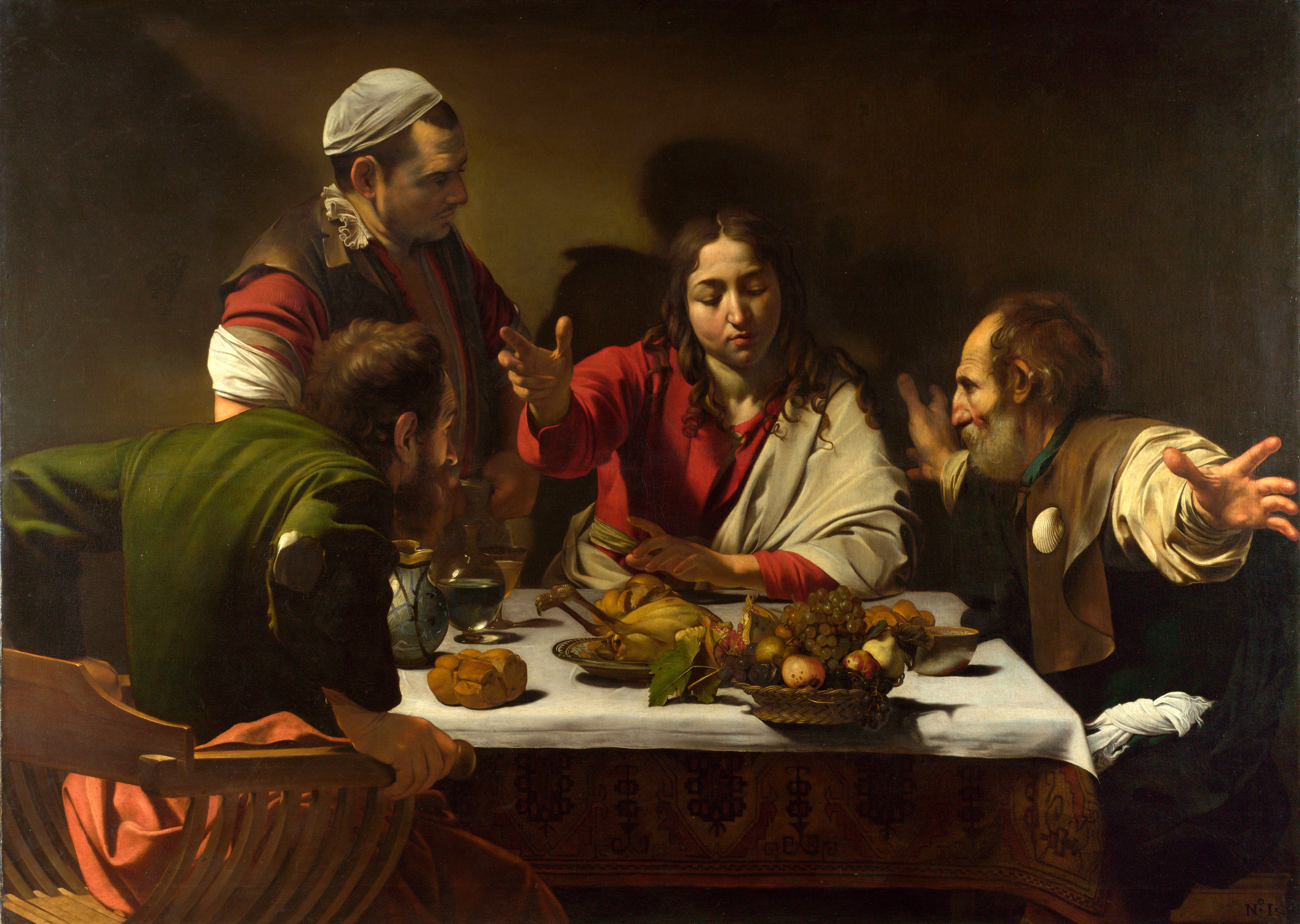
So, what is the new kind of life? It’s not a set of rules as it was in the Old Testament, and it’s more than a recited prayer, as it’s portrayed today. The new life is more akin to a steady work of becoming like Him. “Be holy, for I am holy” (1 Peter 1:16). “Put to death therefore what is earthly in you” (Colossians 3:5). This is a life of cleansing ourselves of what is ungodly, of selfishness, lust, greed, a hunger for power, and every indulgence that distorts love, so that our lives begin to reflect His. The pattern put forward by Christ is not reclusive, but lived as an engaged participant in the lives of others. It looks like tables filled with friends and strangers alike, mutually carried burdens, and lots and lots of triumphant joy: a joy that endures suffering and is shared. People are drawn to this joyful new life because they see a life that is actually being lived.
In Revelation, the pattern continues. “Let us rejoice and exult and give him the glory, for the marriage of the Lamb has come, and his Bride has made herself ready” (Revelation 19:7). “And I saw the holy city, new Jerusalem, coming down out of heaven from God, prepared as a bride adorned for her husband” (Revelation 21:2). And, here is the culmination: “Behold, the dwelling place of God is with man. He will dwell with them, and they will be his people” (Revelation 21:3). “I saw no temple in the city, for its temple is the Lord God the Almighty and the Lamb” (Revelation 21:22). God’s Kingdom is not a structure or a temple built by human hands, but God Himself dwelling with His people.
The language is intimate because the original blueprint was union. In Genesis, out of one came two, and in their (re)union there was life. “One flesh.” Now, at the end, Christ and His people are united as bride and bridegroom. This is the fulfillment of the design. Christ was there before creation. “All things were made through him” (John 1:3). “He is before all things, and in him all things hold together” (Colossians 1:17). He desires to be one with His creation, and “every knee will bow… and every tongue confess that Jesus Christ is Lord” (Philippians 2:10–11). Yet not all will be part of the bride, and if you take the words of Jesus seriously, eternity outside of the presence of The Lord remains an inescapable reality. As C. S. Lewis said, “There are only two kinds of people in the end: those who say to God, ‘Thy will be done,’ and those to whom God says, in the end, ‘Thy will be done.’” The Bridegroom only longs for a willing bride. He will not force Himself upon us.
What this means for us now is simple, yet demanding, which is to become like Christ. The Israelites missed the Messiah because they were looking for something more grand and more visible than what God had actually promised, and we are in danger of doing the same. Christ is the temple that was raised, and nothing needs to be added to that, which leaves us with a more uncomfortable question than what we can build or predict, and that is whether we will become the kind of people among whom God would dwell.
“Love the Lord your God.” “Love your neighbor as yourself.” “They will know you are Christians by your love.” “Whatever you did for the least of these, you did for me.” In these teachings, Jesus is providing instruction and describing what an indwelt life looks like. When we imitate Christ, we are bound together with our families, friendships, and communities in a way that actually tastes like life (maybe “salt of the earth”). It manifests as shared meals, mutual burdens, enduring joy–an abundant life.
We need to stop looking for hacks and loopholes, and stop trying to force His hand. Like a dog to its vomit, we return to our old patterns–things we can measure, construct, or trigger, as though the kingdom could be brought about by the right sequence of events. In some streams of dispensationalist thought, this shows up in the expectation that rebuilding a physical temple will trigger the next phase of history, as though God’s purposes hinge on our ability to reassemble what Christ has already fulfilled. That same instinct is not far removed from the way many speak about current conflicts, for some, even including the war with Iran, as though escalating violence or geopolitical maneuvering might accelerate Christ’s return. But what is unfolding is not a lever to pull or a prophecy to force into motion. There are fair-minded political arguments to be made about Iran’s regime, but they have nothing to do with Christ’s return. To treat these events as a means to an end is to repeat the same error, reducing God’s purposes to something we can engineer rather than something we are called to embody.
He has already made His intention clear. The temple has been raised in Christ, and the dwelling place of God is no longer bound to stone or geography. What remains is the formation of a people whose lives are shaped by His presence, whose loves are rightly ordered, and whose shared life reflects His character. So let us live in such a way that people do not merely hear about the kingdom of heaven, but step into it, among us, through a shared life that is righteous, full, and abundant.
I hope that, in doing so, our religious communities regard us with the same suspicion they did Christ. “A glutton and a drunkard, a friend of tax collectors and sinners!” (Matthew 11:19). “He has a demon and is out of his mind” (Mark 3:21–22). “This man receives sinners and eats with them” (Luke 15:2). May we be also accused of breaking the wrong rules, upsetting the right establishments, and loving the wrong people too well. Brothers and sisters, let us be people worthy of the indwelling.